Perfectionists in the team – curse or blessing?
You did it perfectly! But is perfectionism actually good? And what does it mean for the team when someone constantly plays the perfectionist?
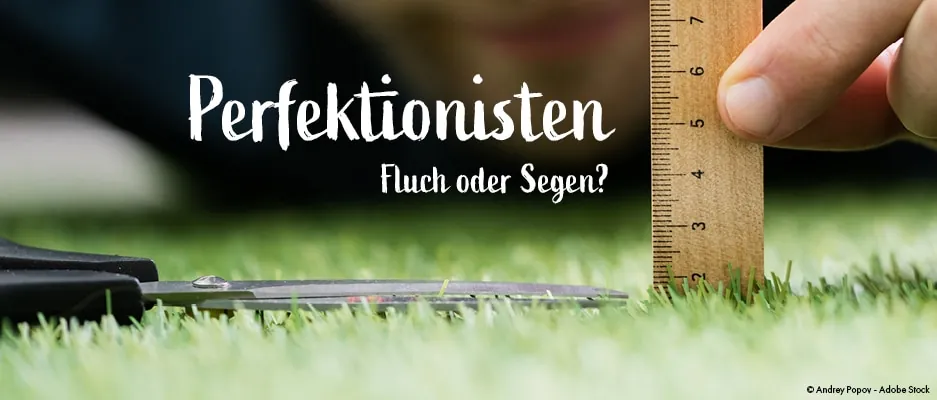
Perfectionism is often associated with ambition and professional success. Perfectionists have high expectations of themselves – and this also affects teamwork. If a team member has a perfectionist streak, this can be a great asset, but it can equally become a burden for the person concerned and for their teammates.
For a team to work together successfully, different character types should ideally be represented. Having a person on the team with a perfectionist disposition can be extremely enriching for teamwork, as a very ambitious person can optimise the quality of the result. However, dealing with people who want to do everything perfectly can also become a real test for their teammates. So how do you best deal with such colleagues?
These are the characteristics of perfectionists
In working life, perfectionism goes hand in hand with very good work results. People with a perfectionist disposition have high standards for their performance and are very ambitious. They want to be perfect in all areas. But such an attitude also has its downsides.
Perfectionists tend to overcompensate. This leads them to attach too much importance to an action and, as a result, for example, to spend much more time than necessary on that activity, because they want to perfectly master the task in question. You surely know someone like that too, or you may even belong in this category yourself.
On projects where the deadline is just around the corner, it can be very stressful for you and the other members of the team if you urgently want to make progress but the perfectionist gets held up by small details.
Equally, it may bother you and the other team members that perfectionists tend to want to control everything. This can make you feel like a small child being quizzed by their teacher. It may also give you the impression that your teammate or boss doesn’t trust you and wants to follow every step so that everything goes exactly the way they want it.
In addition, people with a perfectionist disposition tend to repeat and improve things until EVERYTHING really is “just right”. Of course, this can help to improve the quality of the result. However, it can also be tiring to get held up by things that may hardly matter and to keep perfecting them further and further – because not everything has to be worked out down to the last detail.
Perfectionists are also characterised by being real organisational talents. They love to plan. This can be very valuable for the team, as it results in a clear process.
So perfectionists – like all other character types – have strengths and weaknesses. If these are taken into account in your team, a “perfect” person is a very valuable teammate.
Good or bad perfection?
To be able to classify perfection as an asset or a burden, you can ask yourself the following question:
Does the perfectionism come from striving for success or from fear of failure?
When you read this question, you may think that it comes to the same thing anyway. In fact, however, that is not the case. The whole attitude depends on which it is. If a person is a perfectionist because they strive for success, this moves the work forward well. If, on the other hand, this overzealousness arises because the person is afraid of failing, the downsides of this character type become more apparent, as pressure and stress spread and carry over to the whole team.
But how can you tell positive and negative perfectionism apart?
Negative perfectionism
Negative perfectionism feeds on an unfulfilled need for encouragement and attention. Through their urge to do everything perfectly, the person concerned also tries to gain more control. Negative perfectionism affects very strong-willed people who always give their best and want to do everything perfectly. The catch, however, is that their efforts come from an outwardly focused motivation. This leads to a feeling of stress, pressure and fear of failure. The person concerned feels very insecure and is plagued by a great fear of failure. That is why they want to do everything perfectly, to protect themselves from possible criticism.
Positive perfectionism
In contrast to the negative variant, the positive form comes from an inner source. Positive perfectionism is present when someone likes to challenge themselves and wants to improve constantly. This kind of perfectionist behaviour can help you to focus completely on a task.
How to deal with perfectionists in your team
Working as a perfectionist can considerably increase the quality of the work done by you and your team. Taken to extremes, however, it can prevent you from reaching your goal. That is why it is important to aim for the right way of dealing with it – because then perfectionist behaviour gives wings to the project of you and your team members. But what does the right way of dealing with it look like?
Show appreciation
Doing good work is very important to perfectionists. Recognition for the person’s work signals to them that they have done their job well. This can give your perfectionist teammate the confidence that the step they have completed was done well and can be closed, so that they can move on in the process towards the end result.
Clear targets
As a manager, it is important that you set perfectionist employees tight limits. This prevents them from getting tangled up in small details. Perfectionists also really appreciate it when the expectations placed on them are clearly communicated.
Conclusion
Perfectionism can be a great advantage for the team
If you and your employees or colleagues are aware of the best way to deal with perfectionists, this is very valuable for your collaboration. That way, you and your team members get the best out of each project. However, perfectionism can also slow down overall progress. Here it helps to make clear to the person what really matters, so that they don’t get lost in trivial details. It is best for a team if you and your teammates bring different character types that support or balance each other. This ensures that the strengths of the different people come together and result in ideal collaboration.