Servant leadership: leading as a service to employees
In servant leadership, the manager plays less the role of an authoritarian boss and instead serves their employees as a supporting force
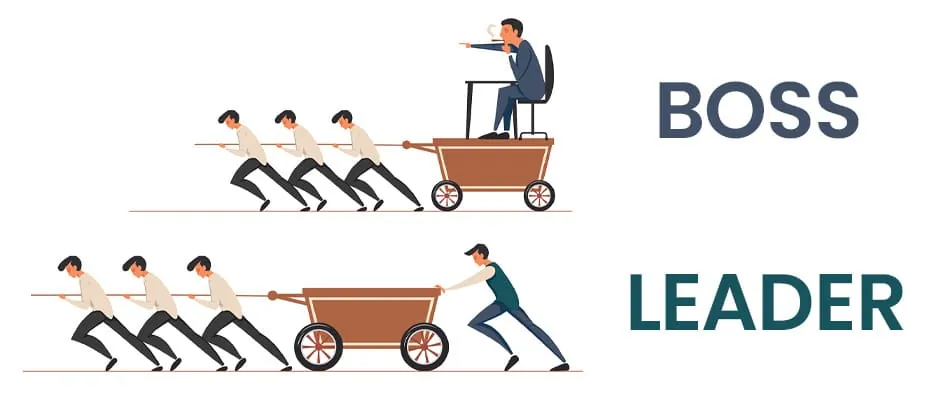
Leading a team of employees is a highly complex matter that you cannot just deal with in passing. It takes much more effort and time than you might think. It is not always easy for managers to find the right way of dealing with employees, because everyone has different expectations of the job and every character is different. The key is constant communication that does not break off even when the sea gets stormy. It is important to have a good “line” to each individual and to maintain and develop it consistently. The principle of servant leadership reverses the roles. The boss becomes, so to speak, an employee on an equal footing. A management that is supposed to promise leadership and puts itself on the same level as the employees. Can that really work?
What is behind the term “servant leadership”?
Servant leadership means that managers actively work in day-to-day business and put themselves on the same level as the employees. In doing so, they are closer to the employees and learn more about them, which in turn creates closer cooperation. Accountability and responsibility increase and have positive effects on everyone involved.
Skills and core tasks of a servant leader
Bosses are often not seen as leaders by their employees because people deny that they have the necessary skills. As a rule, any boss has lost once their team no longer stands behind them. A football coach does not stand a chance either if the team does not believe in them and their ideas. So a boss has to earn real respect by not just seeming halfway competent but actually being competent. To do so, they should be able to do and know more than everyone else. As a rule, however, this is not the case at all. Sometimes the employees are even more competent than the manager.
The principle of servant leadership turns this classic role pattern of management leadership on its head – leading as a service to employees, so to speak. It is about being closer to your team, holding back with your own ideas and actively asking the team for ideas. In other words, behaving almost as if you were still in training and wanted to learn as much as possible about the project in question. Including where possible problems are seen and how they might be solved quickly and efficiently.
For the boss, this has the advantage of being able to hand over responsibility. Several shoulders can carry it better, several pairs of eyes see more than just one, and several employees offer many solutions. They take some of the load off management, so to speak, because they are simply trusted with more. This strengthens each individual’s self-confidence, and the whole team gets a completely new view of its boss. However, the team has to want this, otherwise they might interpret it as “weak” leadership.
There are of course always colleagues who would rather be told how to do what instead of thinking for themselves and then acting on their own initiative. If management gives its employees more freedom and more responsibility, at best this leads to every single member of the team being extremely motivated to take things into their own hands. They feel a little as if they are, or are becoming, a kind of co-boss themselves.

Servant leadership vs. traditional leadership
Both styles of leadership have advantages and disadvantages. You cannot say across the board which type of leadership is better or worse. It depends on the team. You have to look at the people you have and what kind of leadership they need for their work. Working conditions are never ideal for everyone either and should be constantly improved through lively exchange. A good boss has to see and recognise this and act accordingly. If they misjudge their team, they can either under- or overchallenge them. Both would be disastrous for any company. Not to mention the working atmosphere.
What does servant leadership achieve?
Let us assume the manager does not apply the servant leadership principle and makes it clear straight away that only he knows the way forward and that only he decides it. As long as he delivers good, solid results, this is not a problem. But if something goes wrong or not as announced beforehand, this manager has a big problem. He is then completely on his own.
If he had put himself at the service of his employees, or on their level, from the start, he would have loyal employees around him when things go wrong, who would sail close to the wind for him even in the strongest storm and try to come up with solutions to the problem. They would then act together as a team, in which the employees serve only the matter at hand. It can achieve a lot with the right employees who fit in and are willing to go down this path together. Then the boss becomes a helper and can help their employees to develop (even more).
… when managers serve …
When a manager from senior management starts to swap roles and, so to speak, slips in below the team, they are deliberately leaving the senior management level. They have to proceed with great skill and sensitivity and not make themselves too small when “serving”. It can be very helpful if the manager already had a very good relationship with their employees beforehand.
Conclusion
With a little psychological skill in leadership, the principle of servant leadership can be or become a real “win-win partnership” for managers and their employees. For this, a few ground rules have to be observed, and there has to be appropriate communication and appreciation on an equal footing. Then this new kind of leadership can enrich both the team and management!