Success at work through self-organisation
Discover effective methods for learning self-organisation, keeping track in the chaos of everyday life and never missing a deadline again.
If you are drowning in your daily tasks, always have an untidy desk and keep missing important deadlines, you have a big area to work on: self-organisation. If you manage to organise yourself well, you keep your head above water in the chaos of everyday life, always keep track and never miss a deadline again. The following article tells you which methods can help you organise yourself.
The definition of self-organisation
In this article, self-organisation means structuring yourself and your own workflows well so that you work efficiently. Self-organisation covers all the processes, methods and actions that make your own work more efficient.
This should be distinguished from the term self-organisation in organisational psychology. There, self-organisation means a way of working in which teams organise themselves independently and largely take on responsibility themselves, without the need for a manager.
The advantages of good self-organisation
If you have learned self-organisation and can structure and organise yourself well, you benefit on many levels. The most important advantages are summarised here.
Keeping track of everything
If you are well organised, you always keep track, even when you have lots of tasks. This means that appointments are kept, deadlines are not missed and you are seen as reliable.
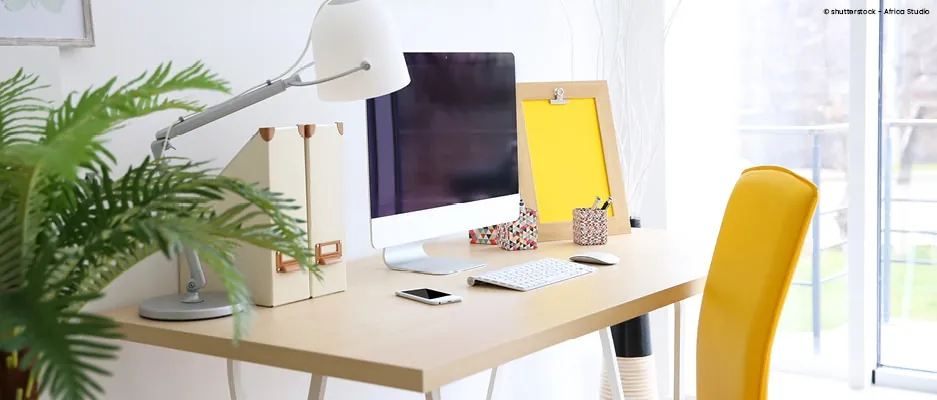
A tidy desk
Good self-organisation also means that your own desk is tidy. Important documents are always to hand. You know where to find data and information on your PC, and in your e-mail inbox you have set up a structure that keeps all messages well organised.
Priorities are clear
If you are well organised, you are hardly prone to procrastination. That is what it is called when you keep putting off important things and busy yourself with trivial matters until it is almost too late for the important task. Perhaps you remember this from your studies: at exam time, your room was at its cleanest because you would rather clean than study.
Saves time
Good self-organisation saves you time. Not only do you not have to keep searching for things. You also know which appointments are important and urgent, and you concentrate on what matters. That way, you do not waste precious time.
Less stress
If you keep track of everything, you can reduce your stress level. You will not overlook the deadline for an important submission or plan too little time. You do the right things at the right time.
Better work results
If you plan enough time for important tasks, always have all documents to hand and can focus, your work results will improve. You not only have time for the work, but can also plan time for checking it.
The best methods for better self-organisation
You finally want to be better organised and not go under in the chaos of everyday life? But your previous approaches have not worked? The following methods can help you organise yourself better. Because self-organisation is something you can learn.
Eat the frog
“Eat the frog” is “Friss den Frosch” in German. No, you are not supposed to eat frogs’ legs for breakfast from now on. The closest German equivalent of this English expression is “die Kröte schlucken” (to swallow the toad). It means that you should do the most unpleasant task first thing every day. There is that e-mail with the customer complaint that has been flagged in your inbox for days? An important customer is waiting for a revised quotation? You finally have to send the briefing for the marketing campaign to your boss? You probably know how you would rather keep putting such tasks off. But that does not make them go away, and at the same time they weigh on your concentration. In future, eat the frog and do such tasks first thing in the morning. You will see how this can give you a motivation boost for the whole day.
The Eisenhower matrix
The Eisenhower matrix consists of four quadrants and sorts tasks by importance and urgency into the following four categories:
- Important and urgent
- Important but not urgent
- Not important but urgent
- Not important and not urgent
Sort your tasks into one of the four fields, and you have a prioritisation to guide you.
The two-minute rule
This method is easy to explain: you should do any task that takes no more than two minutes straight away. That way, you can quickly tick off many tasks during the day without them weighing on you any further.
The Pomodoro technique
The core of the Pomodoro technique is that you put together task packages that take about 25 minutes. Set a timer and switch off all sources of distraction. Now work on the task with full concentration and then treat yourself to a 5-minute break before moving on to the next task. With this method, you switch off the widespread habit of multitasking and have a good chance of getting into the flow and doing things efficiently and to a good standard.
The ALPEN method
The ALPEN method is named after the German acronym that outlines the following approach to planning tasks:
- Write down tasks
- Estimate length
- Plan buffer time
- Prioritise decisions
- Check afterwards
Work with a board
To keep track of their many tasks, successful people like to work with a board, as known from SCRUM, for example. You could work with a whiteboard and Post-its, for instance, and divide your board into the categories “Backlog”, “Work in progress” and “Waiting for feedback”. That way, you keep track of all your tasks. Whether you keep the board on paper in the office or digitally on your laptop or smartphone is up to you.
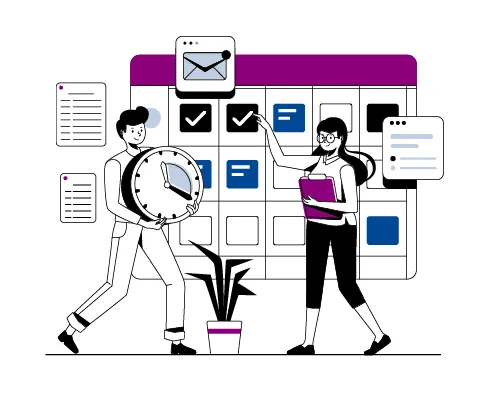
Your digital workplace including a Kanban board
With infra-struktur, you create a digital workplace tailored to you and your most important topics. And for efficient task and project planning, the Kanban board is included.