Agile methods: 3 examples you should know
Agile methods have become indispensable in project management for breaking up rigid processes and encouraging flexibility
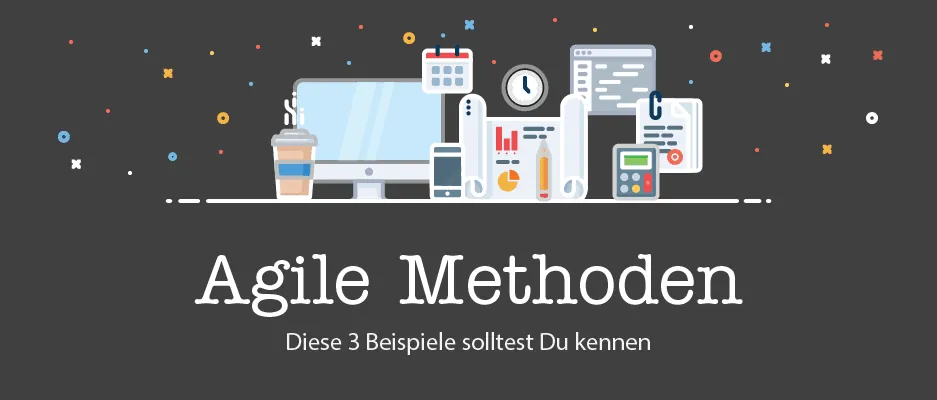
Always staying on the move is an important success factor for modern companies. Not at all easy when fixed hierarchies and rigid working techniques get in the way of your own flexibility. This is where agile methods come in. They break up traditional processes and so lay the foundation for greater momentum. Read on to find out which core values make up these adaptable concepts and how they can be put into practice.
What characterises agile methods?
Agile working methods are all about flexibility, adaptability and communication, and are mainly used in project management. Their open design enables companies to react quickly to changes or mistakes. Hierarchies are deliberately kept flat to encourage employees to act in a self-organised way – unlike with traditional working techniques. Instead of setting a long planning horizon, several interim goals are defined and tackled step by step.
An important part of agile methods is the ongoing interaction between team members and between the company and its customers. Regular meetings or feedback rounds take place for this purpose. This way, the wishes, expectations and needs of the target group can actively feed into individual processes or entire project phases. This stronger customer focus is what sets agile methods apart from other concepts.
The advantages and disadvantages of agile working methods
Internally and externally, your company is exposed to a large number of changing factors. If you integrate them into the development of your products or services using agile methods, your company stays competitive. These adaptable concepts offer decisive advantages.
Advantages of agile methods in project management
- Customer expectations continuously feed into the project.
- Wrong developments and potential for optimisation are identified quickly.
- Thanks to the dynamic way of working, project lead times are reduced.
- Costs are saved because unsuccessful projects can be stopped early.
- Employees work in a self-organised way and are given enough freedom to make suggestions for improvement.
- There is room for new ideas – the company’s capacity for innovation grows.
- Flat hierarchies and the opportunity to work independently make the employer brand more attractive.
infra-struktur brings structure to your project management
Your digital workplace backs you up so you can handle your project on your own responsibility. All the information in one place for your whole team.
Disadvantages of agile methods in project management
- The chosen concept has to suit the size and industry of the company in order to show its beneficial effects.
- Because of the flexible structure, agile methods only allow rough and short-term planning.
An overview of the 3 best-known agile methods
There are several ways to integrate the basic principles of agile working techniques into a company’s project management. The following three methods are used most often across all industries – in their pure form or as a combined model.
1. Scrum
The Scrum method focuses on teamwork and is typically used in product development. The people involved are assigned various roles with different tasks.
The Product Owner defines the desired product features and prioritises the individual tasks. The Scrum Master coordinates the collaboration, while the development team does the work that comes up.
This form of project management is characterised by several work phases called sprints. During these phases, daily meetings take place to discuss the current project progress, possible problems and new ideas.
2. Kanban
The Kanban principle was developed in the 1940s by the Japanese Toyota engineer Taiichi Ohno to improve the company’s internal processes. It is still used today by teams of all sizes, albeit in a modernised version.
In the Kanban approach to project management, there are three phases a piece of work can be in: to do, in progress and done. The tasks are visualised by cards on a board and taken on independently by individual team members. They move from one column to the next until they are completed.
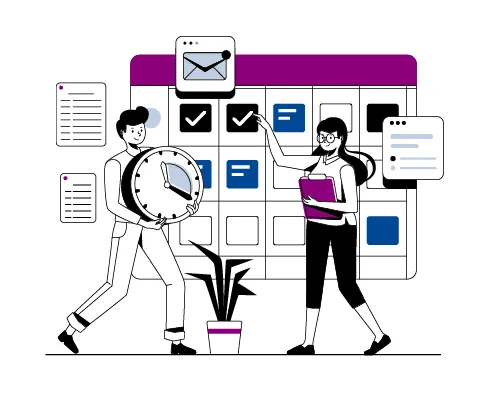
What makes it special: Kanban clearly shows all the tasks within a project. The status of work can be seen by all team members at any time. This means the workload is distributed optimally according to each person’s individual capacity, which leads to faster and more accurate results. Regular exchange and feedback also play a central role in this agile method.
3. Lean
While Scrum relies on stronger teamwork and Kanban optimises the project workflow, the Lean concept aims to streamline work processes. It is suitable for service and product development in small or larger companies.
The Lean method analyses the project processes and filters out the steps that make no significant contribution to the desired end product. These are eliminated to reduce waiting times, overproduction and other risk factors. This makes projects more efficient while maintaining or even increasing high quality.
How to create the best conditions for agile project management
A good starting point is to make smaller, less sensitive projects more dynamic first. The following tips help create the basic conditions for the switch.
Choose the right variant
To benefit from the many advantages of agile working techniques, the concept in question has to suit the size and business area of your company. Ideally, you develop an individual approach that is based on the three variants mentioned above and tailored precisely to your situation.
Align your company culture with the new working technique
Dynamic project management requires flat hierarchies, an open feedback culture and mutual respect. Make your managers aware of their new role. They must be willing to hand over responsibility to employees and should give them enough freedom to develop their individual potential.
Prepare your employees for the agile transformation
The success of adaptive working concepts stands or falls with their implementation. Familiarise your employees with the values, methods and rules of flexible project management. This gives them the confidence they need to work in a self-organised way within agile methods.