Workplace design in the office
What should an office workplace ideally look like? We have tips and examples for the perfect workplace design
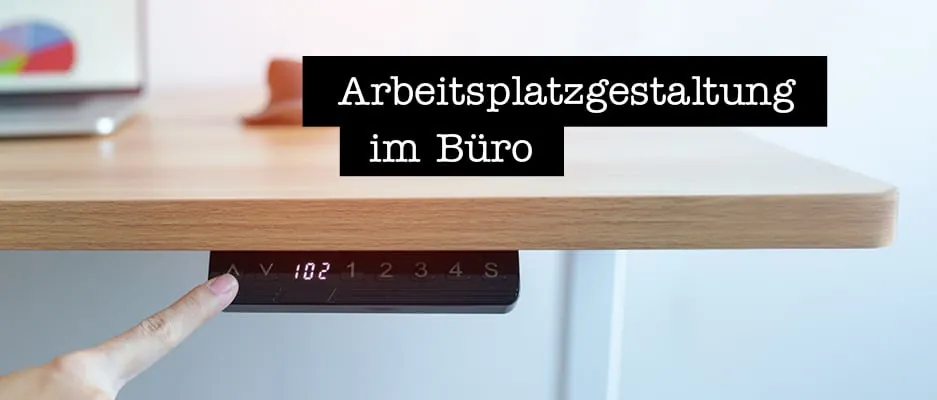
Appropriate workplace design is essential for a good working atmosphere with plenty of motivation and productivity. Workplace design also plays a major role in employees’ well-being and health. With lots of examples, we show you how to design an optimal office workplace.
What does workplace design mean?
Workplace design deals with various aspects of the workplace that create a constructive working environment and a positive working atmosphere. The focus is on employees’ health and productivity.
While organisational workplace design covers all working conditions such as working hours and the length of breaks, technological workplace design deals with the interaction between people and technical devices. Ergonomic workplace design includes measures that reduce the physical strain on employees as much as possible. Some aspects of workplace design are mandatory and laid down in the Occupational Safety and Health Act (Arbeitsschutzgesetz). In addition, training on occupational health and safety must take place at regular intervals.
Examples of successful workplace design in the office
Whether ergonomic furniture, the right lighting or a healthy indoor climate – many factors influence a pleasant atmosphere and a productive way of working. The following examples help you put optimal workplace design into practice in the office.
Ergonomic furniture in the office
To avoid health problems, office furniture should be adapted to employees’ individual needs. Poor posture often leads to back pain and tension. Height-adjustable office chairs and desks are a good way to support healthy posture.

An optimal setting allows employees to place their feet flat on the floor and rest their elbows loosely on the desk. In addition, the position of the screen should support an upright posture. Ideally, the keyboard should be 10 to 15 cm from the edge of the desk. Standing desks and enough breaks for movement are a good way to balance out sitting.
The right lighting at the workplace
Lighting at the workplace plays a central role in good productivity. It increases both employees’ concentration and their visual performance. Well-planned lighting also improves well-being and has a positive effect on the way people work. Depending on the field of work, the right lighting contributes significantly to safety. When designing workplaces, aim for a mix of daylight and artificial lighting. Daylight has been shown to influence the sleep-wake rhythm and is effective against premature tiredness. Ideally, desks should be near windows without distracting reflections or dazzling sunlight. As daylight is not always sufficient due to the weather, the time of day or the size of the windows, the brightness of the workplace must be ensured by artificial lighting. This should consist of both indirect light sources such as ceiling lights and direct light sources such as desk lamps. For office and desk work, the lighting must be at least 500 lux.
Creating a quiet atmosphere
Noise in the office has a bad effect on employees’ productivity and concentration and can damage their health. The noise level in the office should therefore be taken into account when designing workplaces. Separate meeting areas and soundproofing reduce background noise. The noise level permitted at the workplace depends on the activity. For mental work in the office, the level should be no more than 55 decibels.
Climatic conditions in the office
An important aspect of workplace design is the climatic conditions in the office. Rooms that are too warm or too cold both have a negative effect on work performance. Stuffy air also leads to tiredness and lack of concentration. For good air quality, the office should be aired at regular intervals. If the air is too dry, humidifiers create a more pleasant indoor climate. The optimal room temperature is between 20 and 22 degrees Celsius.

Additional ideas
Order and cleanliness at the workplace
A clean, tidy office workplace has a major influence on productivity and leads to a more efficient way of working. Order can also have a positive effect on well-being and reduce stress. To achieve this, the workplace should be well organised and structured. Sorting things out regularly prevents mess and chaos at the workplace. At a tidy workplace, you don’t have to search for the tools and materials you need – they are always quickly to hand.
Colour design in the office
As colours affect the senses, an appropriate colour scheme in the office can influence employees’ mood. Certain colour combinations and intensities can lead to sensory overload and restlessness. Neither a monotonous colour scheme nor a choice of colours with too many contrasts is therefore advisable in offices. A few colours that are matched to each other create a harmonious colour scheme. Slightly different shades and saturations create a pleasant atmosphere.
infra-struktur adapts to you
With infra-struktur you create a digital workplace tailored to you and your most important topics. Anything else would just be standard.
Individual design options
Individual design of the workplace also increases well-being. Employees feel more comfortable and more motivated when they are allowed to add their own personal touch to their workplace. Plants, decorative items or photos create a more pleasant working atmosphere.
Workplace design when working from home
The workplace design examples also ensure productive work and greater well-being when working from home. To clearly separate work and free time, a separate study is advisable. If there is no room available for work, the desk can be placed in the living area or you can work at the dining table. For a good work-life balance, work materials should then be put away straight after work.
Conclusion
Appropriate workplace design has a strong influence on employees’ way of working and their health. Companies benefit from a working environment with good ergonomics, good lighting, a quiet atmosphere and other measures. The examples listed can usually be put into practice quickly and create the best conditions for productive work and professional success.