Slowness in everyday office life: the underrated superpower
Getting tasks done quickly does not automatically mean they are done well. Better results need slowness.

“Wisely and slow; they stumble that run fast.” William Shakespeare and many wise minds before him recognised that slowness is a superpower. And to avoid any misunderstanding: slowness does not in any way mean dawdling. But rushing headlong into things has rarely led to success. So why do so many people constantly feel that everything has to happen quickly? You will find more on this topic below. And feel free to take your time reading!
The myth of speed: the deadline was yesterday
The world is turning faster and faster, the competition does not wait, and missed opportunities do not come back. Because of globalisation, digitalisation and ever more competition, companies have to act quickly and ever more quickly in order to position themselves for the future. And it is precisely this development that contains a paradox worth taking a closer look at. Because when is fast too fast?
Rushing and deadlines that are too tight lead to mistakes and overlooked details. Stress makes you ill, constant overtime creates dissatisfaction, pressure leads to explosions. The statistics on sick notes and staff turnover speak volumes.
The secret may lie in balance. Sometimes it is stressful, sometimes it is calmer. Sometimes a deadline has to be met at full steam, and then a calmer phase follows for organising and tackling strategic topics, which often have to be neglected in the operational rush.
At least, that is what an ideal working world looks like. Reality, however, is often different. Constant stress is the order of the day, and burnout has become a widespread condition. Burnout is matched by another paradox: boreout. Some jobs are so boring and underchallenge the people who do them to such an extent that they become ill.
It is the task of management to ensure balance. And it is the task of employees to point out any sense that something is wrong in good time. As so often, it is communication that is an eminently important factor in setting the right course.
The strengths of slowness
There is a saying from project management: “Show me how your project starts, and I will tell you how it ends.”
The message behind it is clear: careful planning beats the fastest possible execution. You can guess: there is a paradox behind this too. The more carefully a project is planned, the faster it can be carried out under certain circumstances. The American actor André de Shields sums it up quite well in his three rules:
Surround yourself with people whose eyes light up when they see you coming.
Slowly is the fastest way to get to where you want to be.
The top of one mountain is the bottom of the next. So keep climbing!
Learning slowness
To get out of the stress trap and (re)learn slowness, there are of course a few things you can use as a guide. These include the following:
Knowing what you know:
A new project is starting, a new product development is coming up, a new market is to be opened up? With your specialist knowledge, you are an important member of a strong team. So keep learning, take an interest in the latest developments in your profession and stay curious. Because only people who are completely sure of what they are doing can dive into stressful phases with the necessary composure and enrich them with high-quality work.
Enough sleep:
A key factor for more composure is getting enough sleep. People who have not had enough sleep are often irritable, emotionally unstable and unfocused, and tend to be scatty. Last but not least, they are ill more often than people who are well rested. This is quite simply because constant lack of sleep can impair the immune system. Viruses and other pathogens then find it easier to break through the crumbling protective barrier. However, it is not always possible to get enough sleep. Young parents know exactly what we are talking about, as do people caring for sick relatives. Sometimes there really are complex challenges to cope with. A conversation with your manager and/or a new direction at work can, however, help to work out at least temporary solutions.
Hobbies:
Surveys and studies show again and again that people who have hobbies are happier. And there are no limits. Every person has individual interests and can choose exactly the hobby that grips them, interests them and makes them happy and content. Whether it is collecting beautifully shaped stones, building model cars or extreme alpine sports is up to each individual. The effect is always the same: the happiness hormone serotonin is released, and you become balanced and content.
Sport and meditation:
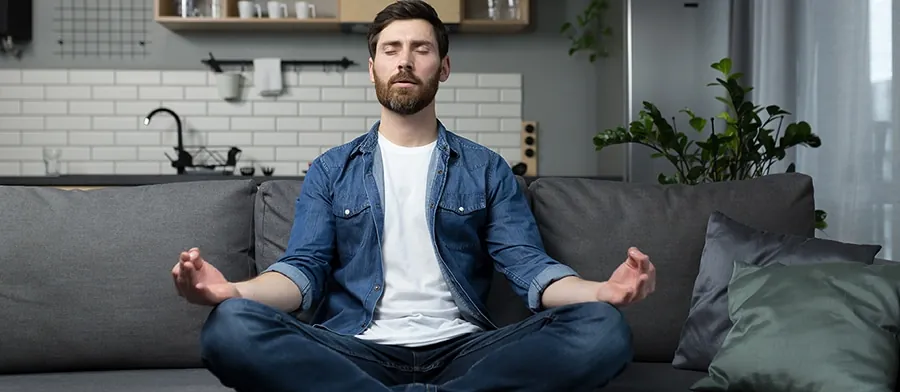
Physical exertion and the calm of meditation can work wonders in stress management. There are countless offers – from club sports to online meditation. Both working out hard and the leisurely pace of meditation help you to perceive yourself more consciously again. And this is a superpower when it comes to slowness.
Tools for more slowness at work and in private life
Are you one of those people who can get an enormous number of things done in a very short time, but are not really happy with it? Take the time to think about whether the following tools could be useful for you:
With time management techniques, a working day can be structured extremely well. For example, consider the Pomodoro technique: you work for 25 minutes and then take a 5-minute break. 25 minutes is an ideal length of time to concentrate fully and perform at your best. And the 5-minute break provides time to recover. But do not scroll through social media on your smartphone. Instead, get up, drink a glass of water and exchange a few words with someone.
Make a priority list. One way to do this is the “Now Next Later” principle. It is based on dividing your tasks into three categories: those you do immediately, those you do next and those you can postpone until later. By dividing up your tasks in this way, you are not overwhelmed by the sheer number of tasks, but keep track of them.
Set digital detox times – without any e-mail, social media or messaging. This minimises interruptions and lets you work on your task with concentration.