Is sitting the new smoking?
In the long run, sitting for long periods is not healthy and is now often compared with smoking, because it also has health consequences.

Why is sitting the new smoking?
People’s lifestyles and ways of working have changed a great deal over the last 50 years, above all through the daily use of computers and the growth of sedentary work. On average, people spend almost 60% of their waking time sitting; for office workers it is as much as 75%. Breakfast, driving, office work, watching TV, etc. … all reasons that make you sit for a short or a long time. But why are the media increasingly comparing sitting with smoking, of all things?
The effects of sitting for long periods
Even if the wording is a little exaggerated, it is true that sitting for long periods is not healthy in the long run. A person who goes out into the fresh air several times a day to smoke a cigarette has the same life expectancy as a non-smoker who stays in the same position in the office for hours. People who work mainly sitting down often suffer from the serious consequences of sitting for long periods and therefore have health complaints more often. That is why sitting is also called the new smoking.
Poor blood circulation and its consequences
In fact, more cases of varicose veins, stiff neck joints and numbness are reported among office workers than among people who do more physically demanding work. When you sit, the muscles in your trunk, neck and shoulders are in a fixed position. Holding this pose compresses the blood vessels in the muscles, which impairs the blood supply to the working muscles.
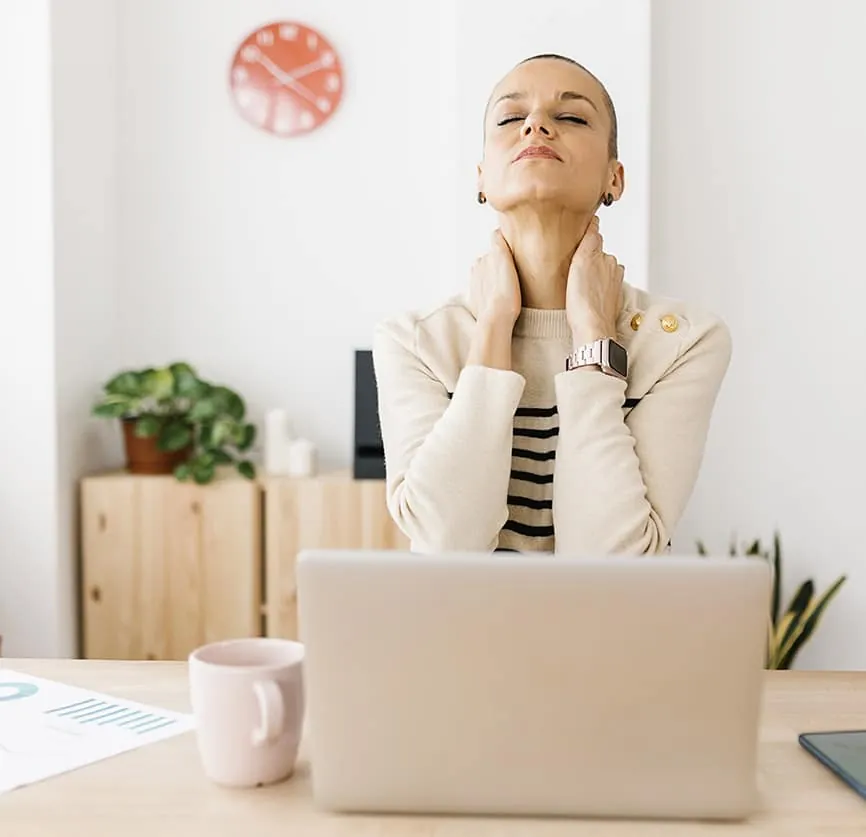
An inadequate blood supply speeds up the onset of fatigue and makes the muscles prone to injury. It also leads to local blood pooling. Pressure on the underside of the thighs when the seat is too high can make this situation worse and lead to swollen and numb legs and, sooner or later, to varicose veins. This reduced blood supply explains why an office worker or a professional driver who mainly sits while working feels tired or sometimes even ill at the end of the day.
In addition, conditions such as diabetes can develop as a result of obesity and lack of exercise. Finally, a study in the “American Journal of Epidemiology” shows that the mortality rate of office workers who sit for long periods rises by around 20% and that they tend to fall ill more quickly *[1].
Changing postures in everyday office life
Imagine you could switch between a sitting and a standing position whenever you like. Under these circumstances, office work would undoubtedly pose a lower risk to your health. The standing position offers many advantages, such as freedom of movement and a larger working area. When you work standing up, you use all your muscles and reduce the fatigue and drowsiness caused by pressure points when sitting. But how can you put this approach into practice?
The height-adjustable desk and office chair
A manually or electrically height-adjustable desk is ideal for adopting different healthy postures in everyday office life. You can easily switch your position from sitting to standing while you work. In ergonomics, there is no such thing as an “average” person. It is simply not possible to offer every person in the company a chair that is specially tailored to their current needs.
A highly recommended solution is to offer employees fully adjustable chairs that are suitable for a wide range of body types. The chair should have levers that allow easy adjustment of the seat height and tilt as well as the height and angle of the backrest.
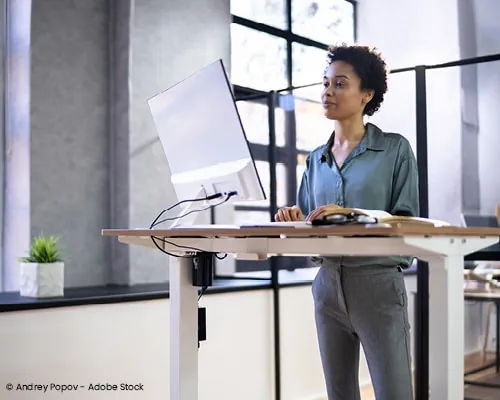
Pay attention to a correct sitting posture
For every major joint, such as the hip, knee and elbow, there is a certain range in which every healthy person can find a comfortable position. These positions must not impair blood circulation or breathing, nor hinder muscle movement or the normal function of the internal organs. Varying these postures is the core of a good sitting posture. Instead of rolling to the printer on your office chair, you should stand up, shake your legs and arms and fetch the papers. Or while copying several documents, you could do a few short stretching exercises. After all, just five minutes of movement is enough to get your metabolism going again.

Make use of your break
If you already spend most of your time at work sitting down, you should at least make use of your break and treat yourself to a short walk. Spending your break this way is beneficial and healthy, as your heart, lungs and muscles are activated and the fresh air clears your head.
Eat a balanced diet and drink enough water
A healthy diet and an active life, combined with a positive attitude, can reduce the risk of heart disease and certain types of cancer.
So instead of reaching for a doughnut at work, you should rather have a fresh apple, so that, combined with the consequences of sitting for long periods, the risk of falling ill more quickly does not rise any further.
Conclusion
Like smoking, sitting for long periods can also make you ill. There are a number of aids and tips that help you organise your everyday office life so that it does not encourage health problems in the long run. Giving up smoking is a tricky challenge, but making changing postures at work a habit should not be too big a problem.
*Links and sources:
[1] https://www.oth-regensburg.de/fileadmin/media/hochschule/organisation/hochschulbeauftragte/gesunde-hochschule/Artikel_Sitzkrankheit_Wiwo.pdf