Buyer persona – give your target group a face
What is a buyer persona and how can it help you make your dream customer tangible? Create a buyer persona for your target group.
What is a buyer persona and how is it used?
The buyer persona is probably one of the most popular methods in sales and marketing today. But what is behind it, what are personas for and can you create a buyer persona for your products or services?
Many people are put off by this buzzword, which is used so often today. Yet buyer personas are both easy to create and simple to use.
What makes a buyer persona?
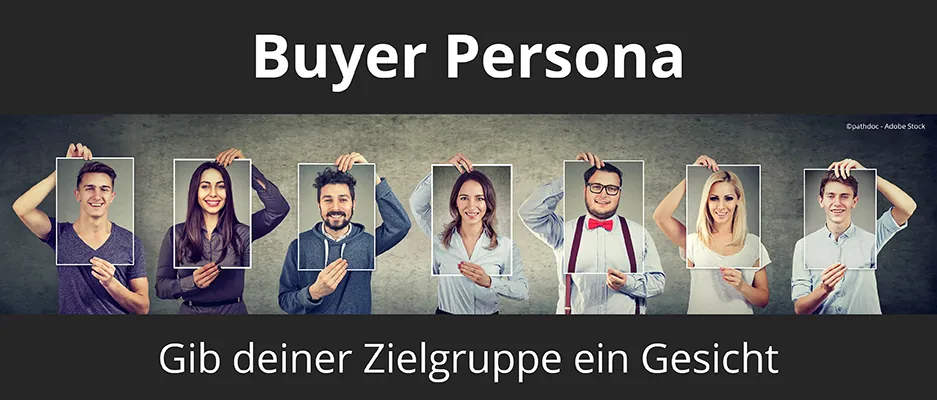
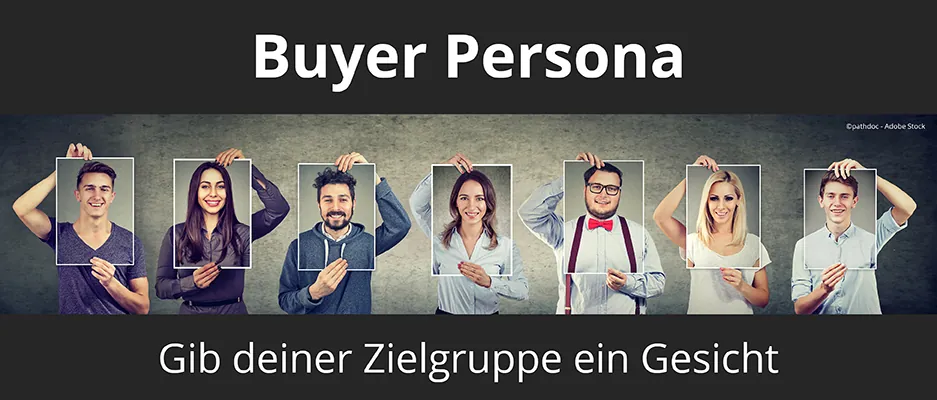
A buyer persona is a fictional person who is meant to represent your target group and whose characteristics are described as if they were a real person. This person does not exist as such – they simply give your target group a face.
Like a real person, a persona has a specific name and their personal characteristics are described in great detail. On the one hand, these characteristics usually include the most important demographic data, for example:
- Gender
- Age
- Marital status
- Occupation
On the other hand, they also include characteristics that describe the persona specifically in their role as a representative of the target group. These include, for example:
- Wishes and behaviours
- Consumer or communication behaviour
and other factors that matter for the product or service in question.
What is the buyer persona for?
The persona plays a particularly important role in various areas of sales and marketing. Probably its most important function is to make the target group more tangible. When we have a person in front of us “with everything that goes with it”, our customer suddenly has a face. This puts the buyer persona in stark contrast to pure key figures and statistical results. These may put facts on paper, for example the average age of a target group. This information is of course important too, but we understand it better when we see it in the form of a fictional person. A persona therefore lets us really get to know the target group, i.e. the customer. We learn about their wishes and behaviours, hobbies and more. This way we see the target group as people and not as a mere mix of different statistical data.
What are the benefits of buyer personas?
This kind of representation has some decisive benefits. When we get to know the target group as people, it is easier for us to put ourselves in their shoes.
What information does Klaus, 57, managing director of a company with 10 employees, need to get excited about your products or services?
How would Sandra, 36, bank clerk, find our products or services?
This increases the chances that the product or service will actually be accepted and valued by the target group.
But the persona has another positive effect: it usually serves as a guiding vision for the entire sales and marketing team. Even if several people are involved in developing a sales strategy, the persona keeps bringing everyone in the team together and reminds them of their actual mission: to offer the persona real added value.
All in all, the better chances of success and the clear guiding vision save a lot of money and time.
Creating a persona: the three most important steps
As a rule, a buyer persona is created using a structured and methodical procedure that always follows a similar sequence.
Desk research
The first phase consists of what is known as desk research. Here, various pieces of information from available studies, your own online research, books and more are gathered and evaluated. Everything that is considered relevant for understanding and narrowing down the target group and the customer base is analysed here as the foundation for a knowledge base. This finally creates a first impression, for example of the age structure of the relevant customer group.
Field research
In the second phase, what is known as field research takes place. This involves surveying people who could be customers. To do this, it is first decided on the basis of the desk research roughly how old the people surveyed should be, where they should live, what job they should do and so on. Then various people with exactly these characteristics are interviewed to find out the rest of the relevant information, namely their needs, goals, wishes and behaviours. The participants are questioned individually on these aspects – the interviews are either recorded on audio or video or written up as minutes.
Evaluation and visualisation
In a final step, the characteristics of the participants surveyed are bundled and evaluated.
Example IT, software and services:
Among those surveyed, there may be some who would rather have everything related to IT and software “from a single source” and prefer a direct contact person. That person keeps their back free so they can concentrate on their own tasks.
Then again, there are some who would rather spend hours getting to grips with the subject on their own and like to acquire the necessary knowledge themselves.
So we have two possible buyer personas.
If the figure-based information also shows that the former tend to be older and male and the latter tend to be younger and female, we have our first clues for specific personas.
These personas are then refined further, described and finally given a suitable photo.

Markus, 49
He has been managing director for 5 years, is a family man, married with two children, and does not want to spend his weekends dealing with IT matters that he still has to catch up on because he had no time for them during the week.
Celina, 27
She has been managing director of a start-up for 10 months, is married, has no children, is very digitally savvy and loves working on her company in her free time too.

Success factors of a good buyer persona
For the buyer persona to work, we should keep a few things in mind when we create it.
One persona alone does not help much
Since the persona should always reflect our target group, we should always create more than one persona. With different personas we can show the most important nuances in our target and customer group. Otherwise we run the risk of limiting ourselves too much and making our products unattractive to a large part of the target group.
No photos or names of real customers!
Probably one of the biggest misunderstandings is that the persona represents real people. That is why many people wrongly use the real names and photos of the participants they surveyed. However, this can cause confusion! It therefore makes more sense to create a fictional customer based on the data gathered who represents several participants at once.
Show yourself, persona!
We create a persona because we want to put the customer as a guiding point of orientation at the centre of developing products and campaigns. It can even make sense to print the persona with all their characteristics in a large format on a poster and hang it up where everyone can see it. That way the fictional customer is always present.